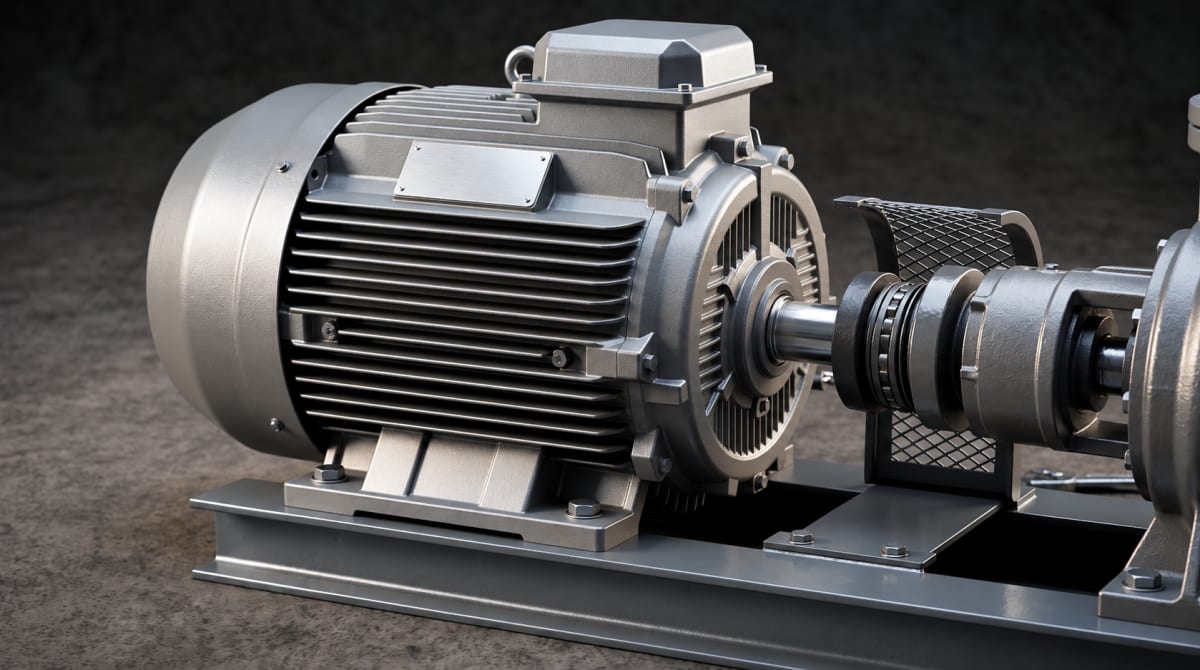
ABB has introduced the SD200 SP4, a severe-duty induction motor aimed at the efficiency standards the US Department of Energy has set to take effect in 2027. The range targets applications where motors sit in wash-down, corrosive or high-humidity environments — food and beverage, wastewater, pulp and paper, and chemical processing.
Severe duty is an enclosure problem before an efficiency one
It is worth separating the two things this product is doing, because they pull in opposite directions.
Efficiency regulation pushes toward more active material. Raising a motor's efficiency class generally means more copper in the windings and better laminations, which makes the motor larger and heavier for the same output, or requires better cooling to hold the same frame size.
Severe duty pushes toward sealing things up. Wash-down service means high-pressure water aimed directly at the motor. Corrosive service means the paint system and the shaft seal are doing structural work. Both push toward more enclosure and less airflow — the opposite of what a more thermally loaded motor wants.
That tension is the real engineering content of a product like this, and it is why severe-duty motors are not simply standard motors with better paint.
What to check on your own installations
The shaft seal is where wash-down motors die. A lip seal that has hardened lets water track along the shaft into the drive-end bearing. The failure presents as a bearing fault and gets recorded as one, which is why the seal keeps being overlooked.
Bearing currents rise with drive-fed motors. Where a motor runs on a variable frequency drive, common-mode voltage can discharge through the bearings and etch the races. Insulated bearings or a shaft grounding ring address it; neither helps if nobody specified them.
Condensation matters more than immersion. A motor that cycles between running warm and sitting cold in a humid room breathes moist air in and condenses it inside. Space heaters and correctly positioned drain plugs are cheap; replacing a winding is not.
Regulatory deadlines tend to be read as a purchasing problem. For anyone maintaining rotating equipment, the useful reading is that the motors arriving over the next few years will run a little hotter inside the same frames, and the things that were already marginal will become less forgiving.