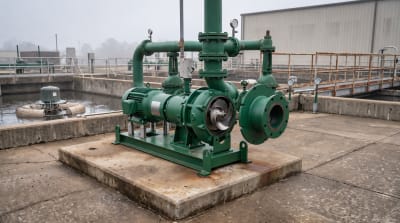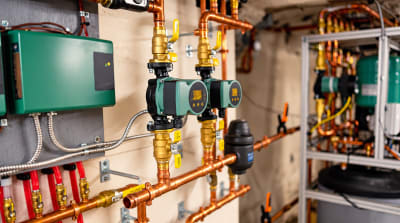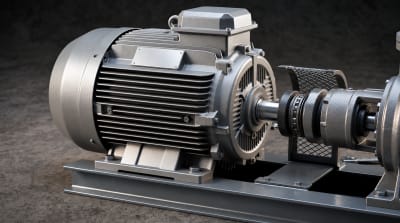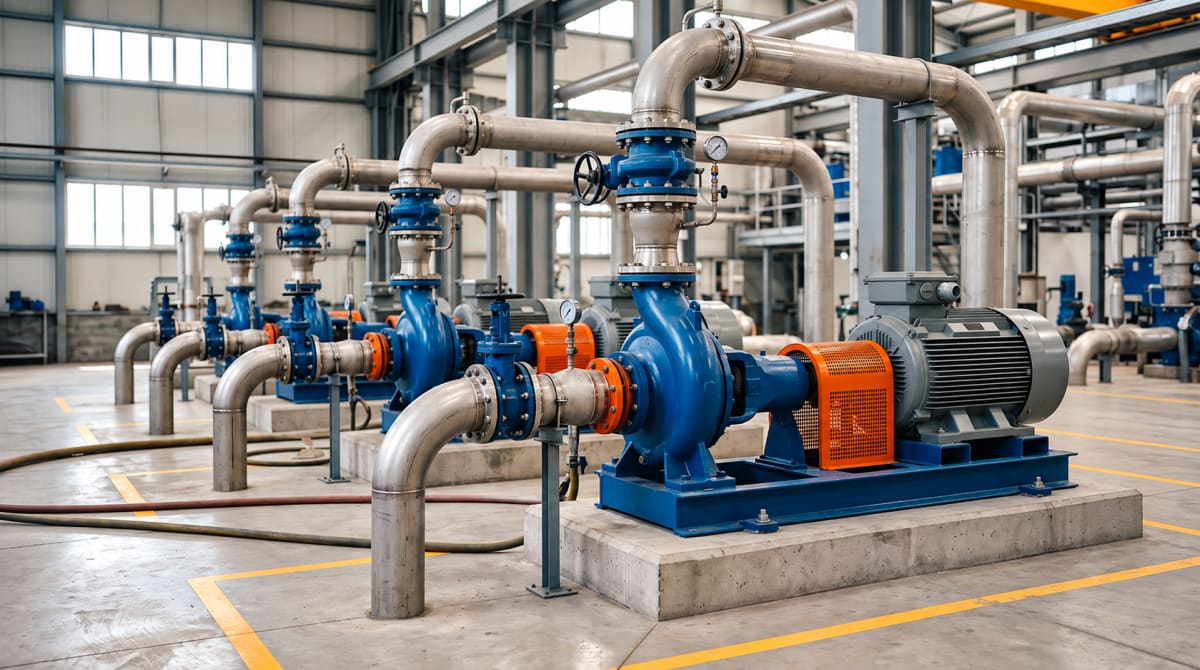
Xylem has agreed to acquire Cornell Pump and Roper Pump in a transaction valued at about $1.46 billion, adding two long-established American manufacturers to a portfolio built largely on water and wastewater centrifugals. Cornell is known for agricultural, municipal and industrial pumps including solids-handling and refrigeration ranges; Roper builds progressive cavity and gear pumps for viscous and abrasive duties.
What the deal actually buys
The headline is consolidation. The engineering interest is in what these two businesses do that Xylem largely does not.
Positive displacement is a different machine, not a smaller one. A centrifugal pump imparts velocity to a fluid and converts it to pressure; its flow falls as the head it works against rises. A positive-displacement pump moves a fixed volume per revolution regardless of discharge pressure, which is why it handles high-viscosity and shear-sensitive fluids a centrifugal simply cannot. Roper gear and progressive-cavity units cover duties where a centrifugal would cavitate, churn or stall.
That changes the failure modes an owner inherits. Positive-displacement machines must never be run against a closed discharge: with nowhere for the fixed volume to go, pressure rises until something yields. Relief protection is not optional equipment on these pumps, it is part of the pump. Progressive cavity units add a stator, an elastomer component with a service life measured in running hours and a strong sensitivity to dry running.
Cornell brings solids handling. Chopper and solids-handling impellers are geometry problems before they are hydraulic ones, and they trade efficiency for passage size. An operator moving from a clean-water fleet to one that handles manure, food waste or municipal solids is taking on a different wear regime and a different spares strategy.
Why it matters to specifiers
Consolidation in the pump sector tends to be read commercially, but it reaches the people who buy equipment in a specific way: the range available under a single commercial agreement widens. A framework that once covered water centrifugals may now cover the viscous and abrasive duties that previously went to a separate vendor.
The practical caution is the familiar one. Standardising on a supplier is only a saving if the supplier genuinely makes the right machine for the duty, rather than the nearest thing in its catalogue. The wrong pump bought conveniently costs more over its life than the right pump bought awkwardly.