Analysis of artificial intelligence in upstream oil and gas has put the potential value at around $230 billion, spanning exploration, drilling optimisation, production management and maintenance.
The number is broad; the useful part is narrow
A figure that large covers work that has little in common. Seismic interpretation and predictive maintenance are both filed under AI and share almost nothing operationally. For anyone responsible for rotating equipment, one slice matters: whether a model detects a developing fault early enough, and confidently enough, to change what you do.
That is a higher bar than it sounds.
What already works
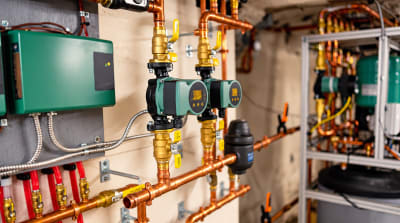
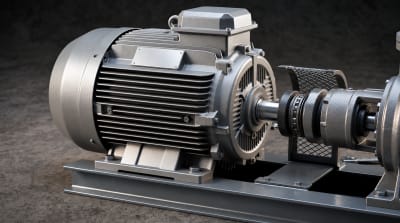
Pattern recognition across many identical machines is genuinely strong. Where an operator runs dozens of similar pumps, a model trained across the fleet sees far more failure examples than any single site accumulates. It can flag a machine drifting away from how its siblings behave — the kind of comparison humans do badly and continuously.
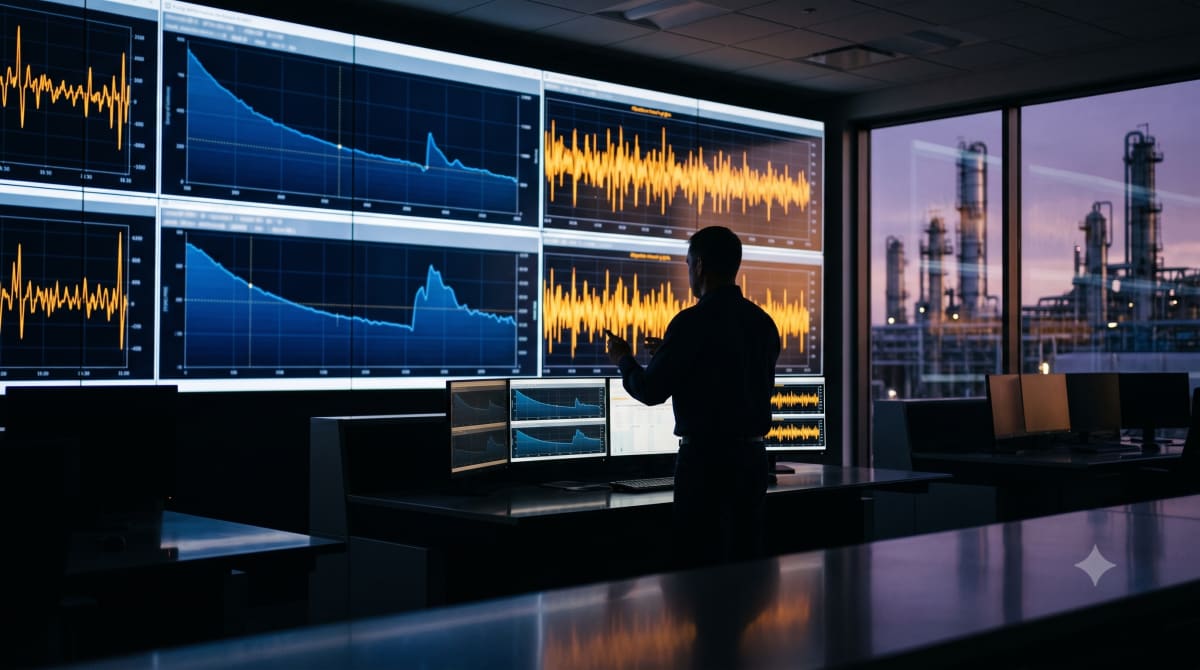
Continuous monitoring beats periodic routes. A monthly vibration survey samples a machine twelve times a year. A permanently mounted sensor samples it constantly. Most of the reported gain from predictive maintenance comes from that change in sampling rate, not from the sophistication of the analysis applied to it.
What is harder than the claims suggest
Failures are rare, which is a problem for training. A model needs examples of the thing it is predicting. A well-maintained pump may run for years without a significant fault, so the interesting data is scarce by definition — and a model trained mostly on healthy operation is good at recognising health.
A warning without a diagnosis is hard to act on. "This machine is behaving unusually" prompts a question, not a work order. Rising vibration might be imbalance, misalignment, a bearing defect, cavitation or a loose foot, and the intervention differs in each case. Systems that name the fault mode earn their place; systems that raise an anomaly score add a task rather than removing one.
Alarm fatigue is the usual failure mode. A detector tuned to miss nothing generates false positives, and a team that has chased several of them starts discounting the next one — including the true one.
The technology is real and improving. The question to ask of any proposal remains the plain one: what will it tell us, how early, and what would we do differently on the day it tells us?