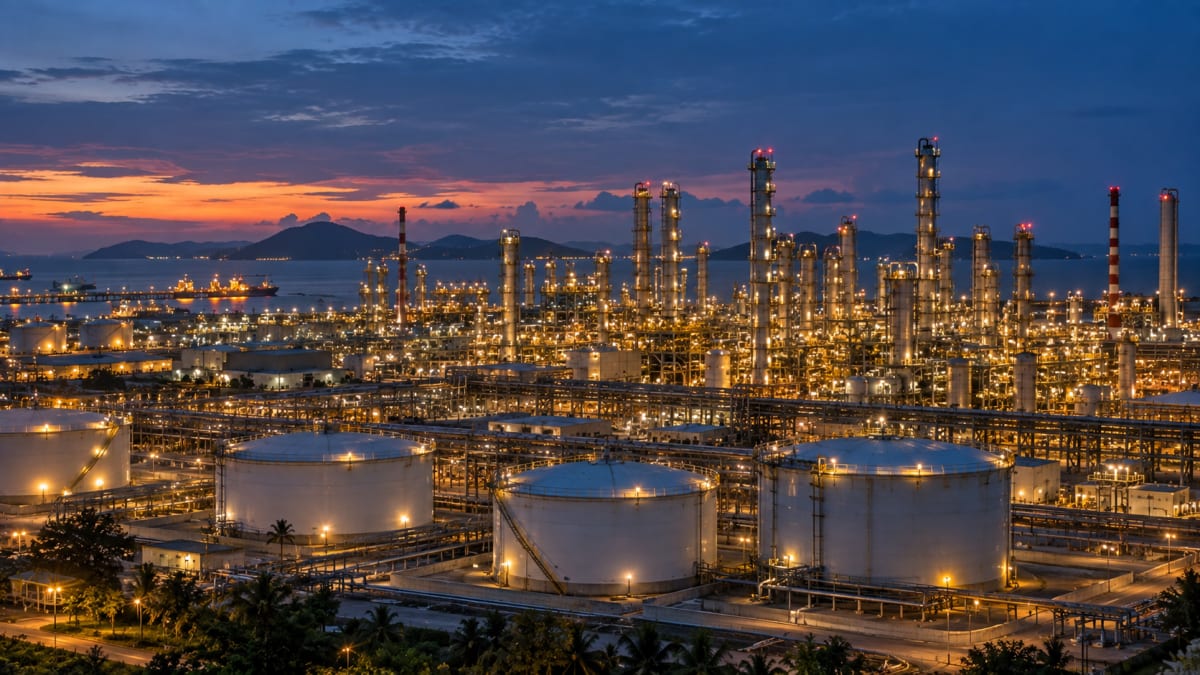
Nigeria's Dangote refinery cut crude imports to a five-month low in August, taking in 499,000 b/d against a nameplate processing capacity of 700,000 b/d. The reduction followed a build-up of on-site inventory and poses a risk to gasoline and jet fuel output and exports. Maintenance work carried out in July is understood to have finished in the final week of that month, meaning August volumes reflect a plant otherwise able to run hard. The refinery has been exporting diesel, gasoline and other products into Europe, Africa and beyond, supplying around a fifth of Europe's jet fuel in July despite a plant fault.
Running at 71% of design is not the same as running slower
The commercial reading is straightforward: product tanks filled up, so runs came down. The engineering reading is more interesting, because a refinery held well below its design rate is in some respects working harder than one running flat out.
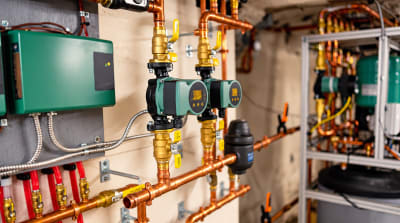
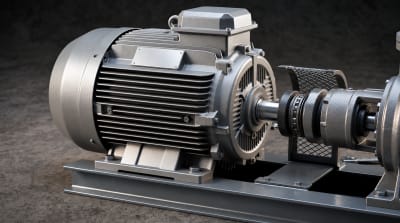
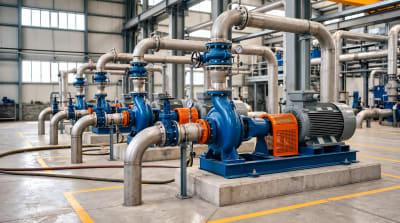
Pumps do not enjoy part-load. A centrifugal pump selected for a design flow is at its best efficiency point at that flow. Push it well below and it moves left on its curve into territory where recirculation begins inside the impeller, with flow reversing and churning rather than passing through cleanly. The consequences are real: increased radial loading on bearings, vibration, cavitation-like damage on impeller vanes and heat build-up. Minimum-flow protection lines exist precisely for this, and at sustained low rates they are working constantly, which is itself an energy penalty.
Compressors face the equivalent problem from the other direction. Reduced throughput pushes machines toward surge, and anti-surge control responds by recycling gas, burning power to move gas in a circle so the machine stays out of trouble.
Fired heaters and columns fall out of their design envelope too. Distillation columns have turndown limits below which trays or packing stop distributing liquid evenly, separation degrades and product quality drifts. Getting yields back requires operator intervention rather than the plant simply settling.
And rate changes cost more than low rates. Each swing means thermal cycling through heaters, exchangers and rotating equipment. Steady operation at any rate is kinder to machines than repeated ramping. A refinery matching runs to fluctuating inventory is doing the harder thing.
None of this is a criticism. Inventory-driven rate cuts are ordinary refining, and a plant that supplied a fifth of Europe's jet fuel in a month is plainly performing. It is a reminder that the number in the headline is an economic figure, and that behind it sits equipment being asked to operate somewhere other than where it was designed to sit.
For anyone specifying pumps on a new plant, the useful question is not what is the design rate, but what is the lowest rate this will realistically run at, and for how long.