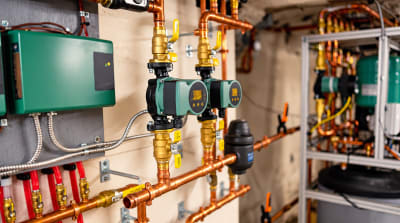
Irving Oil has confirmed a $235 million investment in Operation Osprey, the fall turnaround at its 320,000 b/d Saint John refinery in New Brunswick, Canada's largest. Work begins 8 September 2026, with the mechanical phase running 11 September to 8 November and full completion expected by 18 November: a 75-day window. Around 2,100 additional skilled workers from more than 55 contracting companies will be on site, generating an estimated $14 million in regional economic activity. At the centre of the scope is a major revamp of the refinery's 26-year-old residue fluid catalytic cracking unit. A separate $100 million FCCU upgrade began in June.
Turnarounds are the only window pumps get
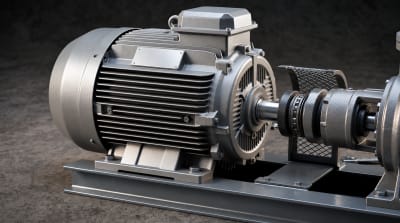
For rotating equipment people this is the most consequential kind of project and the least glamorous. A turnaround is the only period in which most pumps can actually be opened. For 290 days of the year the unit runs and the machines are inaccessible. For 75 days everything deferred comes due at once, against a fixed end date with 2,100 contractors on the clock.
FCC service is the hardest pumping duty in a refinery. Main fractionator bottoms and slurry pumps handle hot oil carrying catalyst fines — an abrasive suspension at temperature. Wear rates in that service are unlike anything on the crude or product side. Impeller and casing erosion, seal face damage from solids ingress and flush system fouling are the normal failure modes rather than the exceptional ones. A 26-year-old unit being revamped means these machines are being examined against a duty that may itself be changing.
Three things decide whether the rotating scope lands on time
Long-lead spares ordered against inspection findings you do not have yet. If a casing is found cracked in week two and the replacement is a 30-week lead item, no amount of labour recovers that. Mature turnaround planning carries speculative spares for exactly this reason, and the cost of carrying them is always smaller than the cost of the alternative.
Seal plan selection matched to the real service. API 682 gives the flush and quench arrangements, but the plan chosen at original design was chosen for the original feed. Where feed slate or unit severity has drifted over 26 years, the seal support system may be the actual root cause of a failure history that has been blamed on the pump.
Baseline data captured on the way out, not on the way in. The cheapest condition monitoring a refinery ever buys is a clean vibration and thermal baseline taken in the first week after start-up, while everything is known good.
Seventy-five days is a tight window for a revamp of this scale. Turnarounds are rarely lost in the big lifts. They are lost in the machines nobody put on the critical path.